SCPN Control
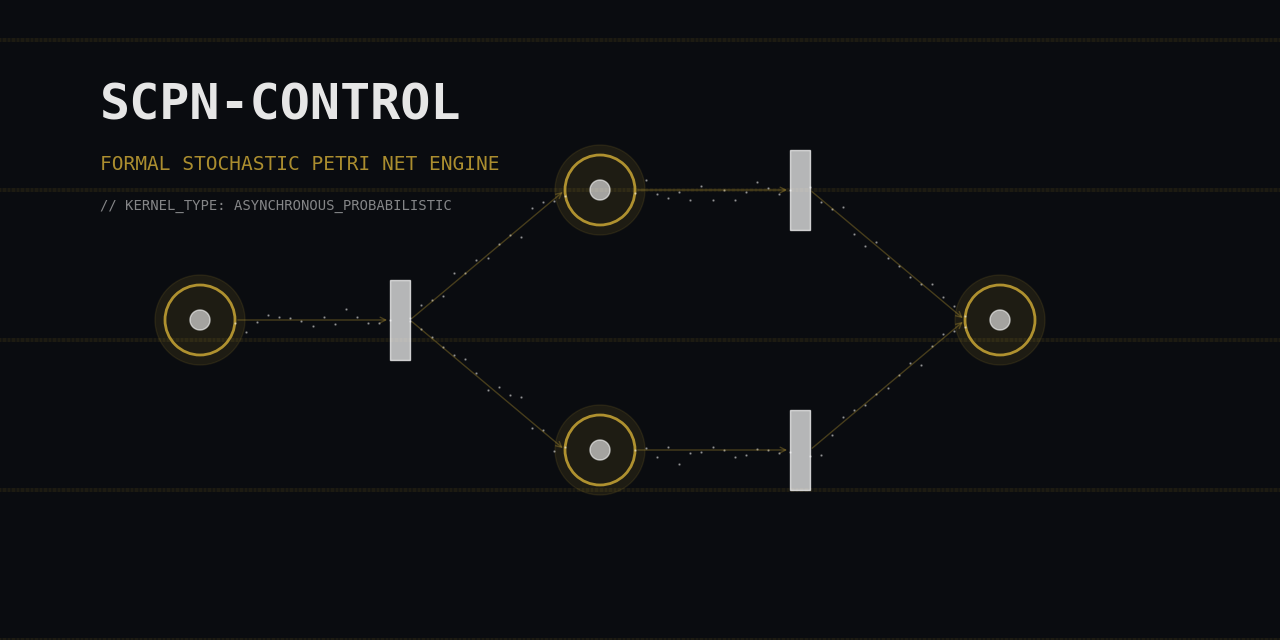
SCPN Control is a neuro-symbolic fusion-control package for turning controller ideas into auditable, replayable, evidence-bound software artefacts. It combines stochastic Petri nets, spiking neural control, robust and nonlinear MPC, phase-dynamics monitoring, differentiable physics facades, public-data validation gates, and runtime safety contracts.
Plain-language summary
A fusion control team needs more than a simulator. It needs a way to answer five questions before any controller moves toward hardware:
- What physical contract is this controller allowed to claim?
- Which data, reference code, or hardware evidence supports that claim?
- Does the control logic satisfy bounded safety invariants?
- Can the runtime fail closed when evidence, authentication, or configuration is missing?
- Can another lab replay the result and see the same admission decision?
SCPN Control is built around those questions. It is not a replacement for a facility PCS, EFIT deployment, TRANSP workflow, or external gyrokinetic code. It is the controller-facing evidence layer that makes those integrations safer to discuss, test, fund, and review.
Current release focus
The current release focus is native execution evidence and formal-runtime claim discipline. SCPN Control now separates Python-orchestrated campaigns from fused Rust/PyO3 campaigns, reports formal-verification coverage explicitly, and uses digest-bound AOT certificate evidence for the hot path. Non-isolated workstation timings remain local-regression evidence; production benchmark claims still require isolated cores, host-load metadata, governor context, and target-hardware or PREEMPT_RT admission.
Why this matters in practice
SCPN Control is designed to close the gap between "works in notebook" and "auditable for a review cycle." The project’s practical thesis is:
- keep controller prototypes executable,
- keep every promoted claim coupled to a validator,
- keep every validator output versioned and reproducible,
- keep missing evidence explicitly visible instead of silently converting into marketing claims.
This means the documentation should be read as an evidence catalog first and a feature catalog second. The strongest value is not a single solver speed number. The strongest value is that claims remain tied to artefacts, and claims that are still blocked remain clearly blocked.
Main surfaces
| Surface | Purpose |
|---|---|
| Petri-net to SNN compiler | Build neuro-symbolic controllers from explicit places, transitions, and firing contracts. |
| Formal verification | Produce bounded reachability, marking, liveness, CTL/LTL, and certificate-bundle evidence for control logic. |
| NMPC and robust control | Prototype constrained plasma-control policies with strict solver lifecycle and admission checks. |
| Differentiable physics facades | Expose JAX-backed controller-tuning paths without claiming facility fidelity before admission. |
| Digital twin and replay | Couple controller logic to replayable plant and external-simulator metadata. |
| Public-data validation | Convert and evaluate public datasets while keeping predictive claims blocked until full evidence exists. |
| Runtime security | Harden WebSocket, native-code, config, and artefact-loading boundaries for fail-closed operation. |
| Documentation and release evidence | Publish enough context for users, collaborators, reviewers, and funders to understand the product boundary. |
What the software is for
SCPN Control is for the stage where a fusion-control idea needs to become a reviewable software artefact. The package helps you answer: what controller was run, what physics/replay contract fed it, what assumptions were declared, what validation artefact was produced, what checksum binds that artefact, and what stronger claims are still blocked.
The core product is not a single algorithm. It is the control-evidence workflow: controller construction, bounded verification, physics/replay integration, benchmarking, report generation, strict admission, documentation, and release tracking. That workflow is useful to research groups, startups, facility teams, and funders because it turns ambiguous demonstrations into auditable evidence.
Application and value map
| Application | Immediate value | Evidence still required for stronger claims |
|---|---|---|
| Controller concept review | Prototype SPN/SNN, NMPC, robust, and digital-twin controllers plus phase-oscillator research models with explicit assumptions | Reactor-specific oscillator identification, HIL replay, target-hardware timing, independent safety review |
| Neural equilibrium preparation | Prepare public MAST EFM datasets, launch reports, and result templates without hiding blockers | Executed full-output training, holdout metrics, latency/GPU-cost reports, EFIT/P-EFIT admission |
| Differentiable control tuning | Use JAX transport/equilibrium paths and gradient evidence for optimisation experiments | External physics validation and target-hardware timing evidence |
| Gyrokinetic validation | Persist CPU/GPU backend parity and local bounded reports | Real GENE, TGLF, GS2, CGYRO, or QuaLiKiz comparison artefacts |
| Safety-case infrastructure | Emit formal proof and certificate bundles for bounded controller logic | Facility hazard analysis, independent V&V, requirements traceability |
| Collaboration and financing | Show exactly what data, compute, and hardware evidence are missing | Funded acquisition, external-code runs, facility-data permissions |
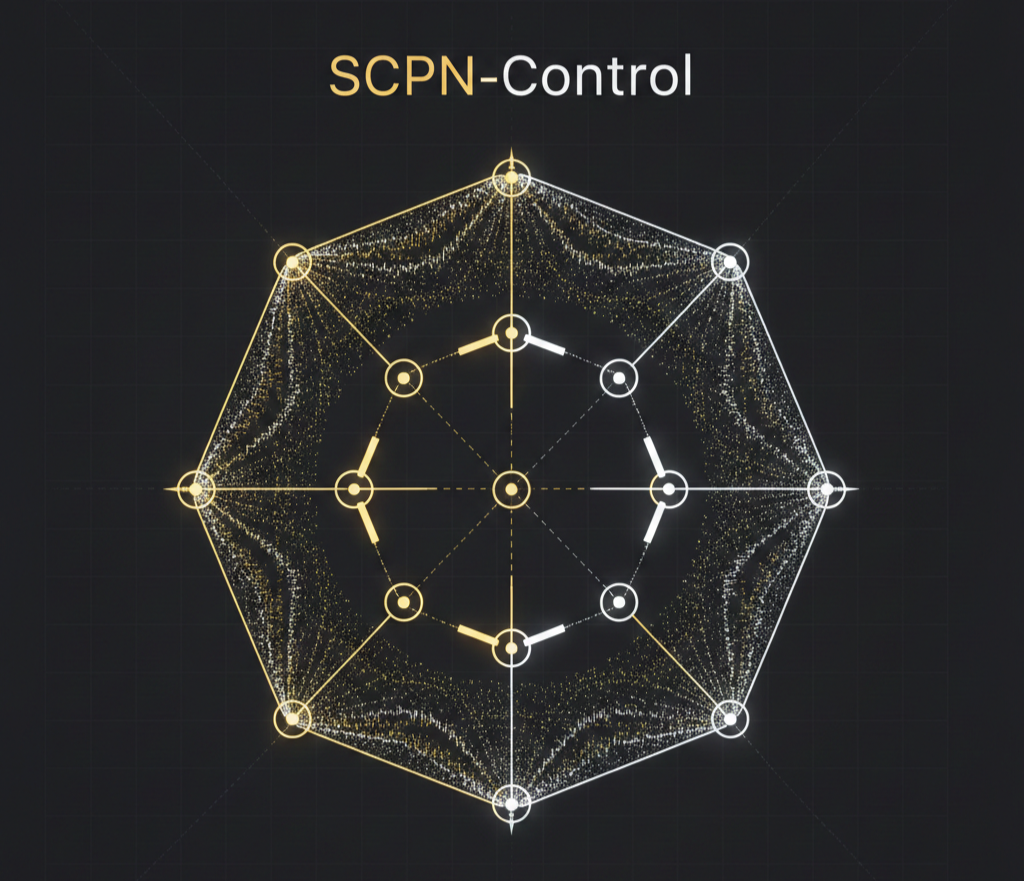
Visual overview
Fast start
For a guided path, start with Onboarding, then run the First Steps tutorial, then choose a workflow from Use Cases.
Evidence boundary
SCPN Control publishes many validators and reports. A passing bounded validator means the repository contract for that surface passed. It does not mean that a facility, regulator, ITER safety case, or external physics authority has accepted the result.
A full-fidelity public claim requires all required artefacts for that surface: measured-shot or documented public-reference data, external-code or independent reference where applicable, exact unit contracts, checksums, declared tolerances, target hardware timing where relevant, and human review.
Support and collaboration
The project needs collaborators and financing for target-hardware benchmarks, external-code validation, public-data curation, cloud GPU campaigns, safety-case review, and facility replay access. See Compute and Validation Collaboration for reviewable evidence formats and claim boundaries.
How this entry page is best consumed
This document is the first orientation point for readers who want a complete picture in one pass.
Use this order:
- Read the plain-language summary to establish the claim and evidence boundaries.
- Read the main surfaces table to identify which module family your review concerns.
- Open the onboarding guide before running any tutorial, benchmark, or notebook.
- Open validation, production readiness, and release notes for claim status before using any metric in funding or external communications.
The goal is to prevent local engineering results from being interpreted as facility-grade evidence.
Practical use and scope
Use this file as the entry hub for public documentation navigation.
- Use this page to find the canonical sequence for onboarding, deployment, validation, and evidence.
- If you are new to the project, begin with onboarding and tutorials before advanced physics files.
- Keep index links synchronized with document renames and release updates.